There’s nothing like an escape to beautiful forest and parks across the UK, spending quality…
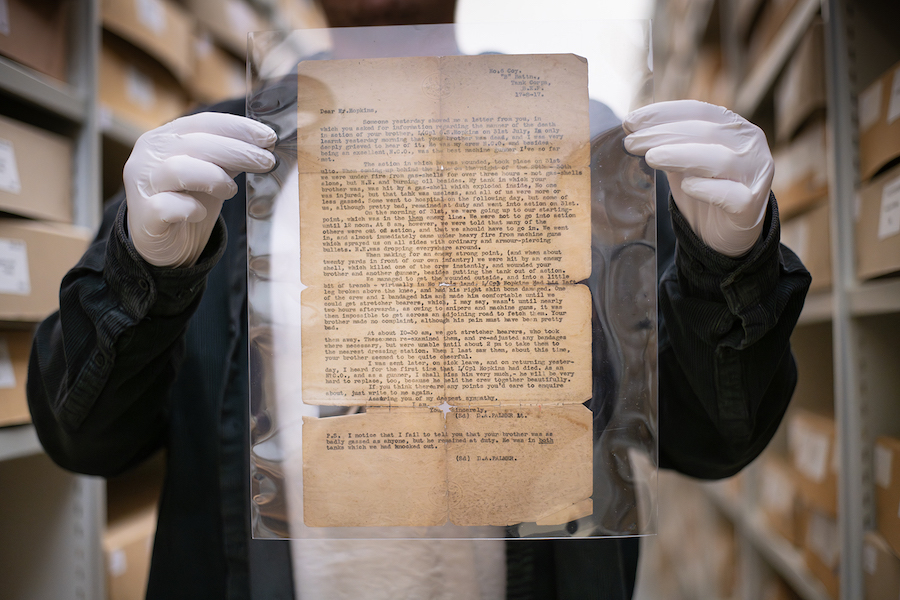
WWI Tank Gunner’s Story Discovered in Moving Letter
A letter recently donated to The Tank Museum, poignantly arriving the week before Remembrance Sunday, offers a glimpse into the bravery and resilience of tank men facing the horrors of the First World War.
When the grieving brother of Lance Corporal G S Hopkins wrote a letter asking for information regarding how his brother died, Commanding Officer Lieutenant D A Palmer was quick to respond with a detailed account of the final days of “the best machine gunner I’ve so far met”.
In his letter dated 17 August 1917, Lt Palmer provides a detailed account of the tank actions in which L/Cpl Hopkins was injured and later died.
After their tank was put out of action by a gas-shell, both L/Col Hopkins and Lt Palmer resumed their duty in a second tank, which was hit by a shell the following day, causing Hopkins’ injuries. Palmer and another member of the crew bandaged Hopkins and made him comfortable: “Your brother made no complaint, although his pain must have been pretty bad.”
Lt Palmer last saw L/Col Hopkins when he was taken to the nearest dressing station, and only heard later of his death:
I was sent later, on sick leave, and on returning yesterday, I heard for the first time that L/Cpl Hopkins had died. As an N.C.O., and as a gunner, I shall miss him very much – he will be very hard to replace too, because he held the crew together beautifully.
Lt Palmer ends his letter inviting Mr Hopkins to write again “if there are any points you’d care to enquire about” and signs off “Assuring you of my deepest sympathy”. Followed by a postscript emphasising L/Cpl Hopkin’s bravery:
P.S. I notice that I fail to tell you that your brother was as badly gassed as anyone, but he remained at duty. He was in both tanks which we had knocked out.
Historian James Donaldson said:
“First-hand accounts of action from WWI are rare, and the fact that this letter dates from the early use of tanks, makes it an invaluable addition to the Museum’s collection.
“It is fascinating, humbling and incredibly moving to read such a personal piece of correspondence. It really brings home the impact of a war often told in terms of large-scale losses on the individual soldier and their families, as well as their brothers in arms.”
To learn more about the story of tanks and tank crews visit The Tank Museum in Bovington, Dorset, or check out their website: tankmuseum.org

Related Posts